

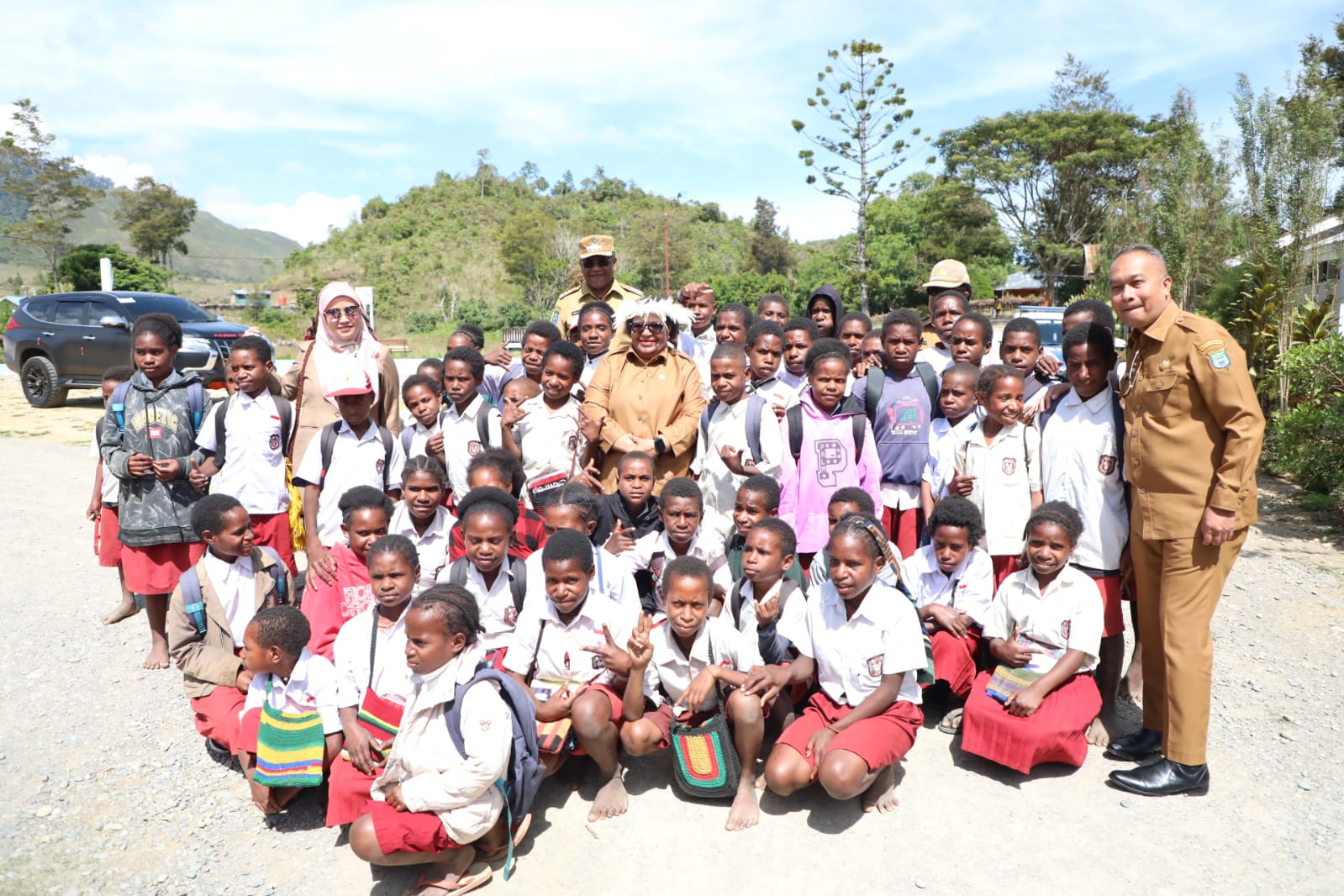
papuachronicle.co – Jayawijaya. Vice Minister of Home Affairs Ribka Haluk socialized the Free Nutritious Meals (MBG) program in Jayawijaya Regency, Papua Pegunungan on Monday (11/18/2024). She emphasized that MBG, which is one of the mainstay programs of the government of President Prabowo Subianto and Vice President Gibran Rakabuming Raka, has been included in the National Medium-Term Development Plan (RPJMN) for 2025–2029.
“The MBG program has been included in the 2025–2029 RPJMN with a target of achieving 5,000 service units in 2025 with a budget of Rp71 trillion,” she said.
This program will be tested by the National Nutrition Agency (BGN) in 102 service units in 100 districts/cities spread across 38 provinces. The trial is scheduled to take place from the fourth week of November to December 2024, targeting 306,000 beneficiaries who will receive nutrition education and MBG meal portions worth IDR 15,000 per person.
“The success of this trial will be the basis for the development and implementation of the program more widely in the following years,” she said.
Ribka emphasized that the MBG program aims to improve the nutritional status of the community, especially children and pregnant women. For this reason, cooperation between the central government, regional governments, and related stakeholders to ensure the smooth running and monitoring of the program in the field is very important.
“The Ministry of Home Affairs as the supervisor and supervisor of regional governments will continue to strive to support the implementation of the MBG program, especially in strengthening and encouraging regional governments,” she said.
On that occasion, Ribka also conveyed several important points that must be followed by all regional heads. First, ensuring that the infrastructure in each service unit, both those managed by BGN and in collaboration with state institutions or third parties, can support the implementation of this program effectively.
Second, providing guidance and capacity building for farmers, MSMEs, and cooperatives as commodity providers to support food security and the sustainability of the MBG program. Third, providing accurate and reliable data on recipients of the MBG program by name and address.
“I hope this activity can be utilized as well as possible to improve your health and intelligence,” she concluded.