

We probably had that one time where we just felt really tired after a day full of work. For some people, they also might feel back pain and stiff. Well, if you are one of them, what would you do?
Well, some people might took a warm bath when they got home. Some took a massage or took a pain relief cream. This kinds of method is usual by people nowadays.
However, there are also traditional ways in relieving this kinds of fatigue.
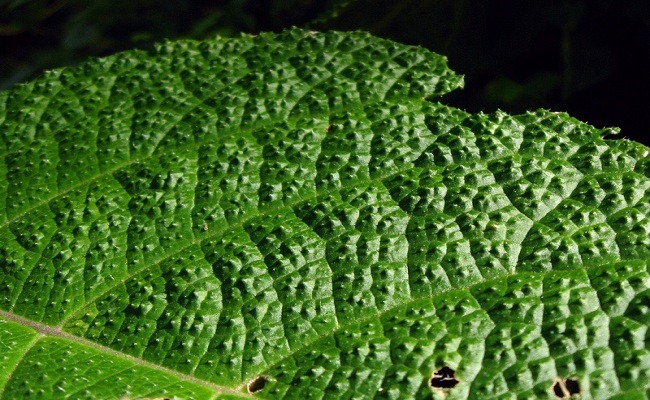
This treatment was introduced by the people from Papua, where they used Daun Gatal. The leaf with the scientific name of Laportea Decumana. The nettle leaf is indeed very closely related with the people of Papua.
This leaf is a native plant of Papua from the Urticaceae family. Physically, the leaves are about 20 cm long and 15 cm wide. This leaves has the color of green and are tapered at the ends and rounded at the base. On the surface, these leaves have fine hairs that look like needles—which, if applied to the skin, can cause an itch.
To use the leaf, all you have to do is pat and gently rub the surface of the leaves to the tired or sore body parts. After that, the body part will feel itchy and red spots will appear, and also it will feel kinds of sore. It should be noted, this sensation is part of the reaction in relieving the fatigue.
Minutes after that, on the part where you apply the treatment will feel warm. Then the feeling of fatigue or soreness will slowly disappear.
Medically, the nettle leaves can indeed treats fatigue and muscle sore. It is all thanks to the formic acid contained in the leaves. Formic acid is present in the glands of the leaves. When these spines are rubbed into the body, these acids are released and allow the pores of the body widening, and this condition will stimulate blood circulation.
And that is why the leaves could help ease the fatigue and muscle sore.
In addition to formic acid, the leaves also contain monoridine, tryptophan, histidine, alkaloids, flavonoids, and authraguinones.
Quoted from Antara, the leaf has long been used by the Papuans, especially those on Numfor Island and Biak mainland, as an alternative medicine to overcome fatigue from working all day. The leaves also believed able to help the delivery process, as painkillers for the women who are about to give birth, as used by the Meyah tribe in Papua.
Not only preserved and used in Papua, the leaves are also used in a number of other areas, such as in Siahari, Ambon, and the Lease Islands. The leaves are also prominent in several countries such as Sri Lanka, India, Nigeria, Cameroon, Bangladesh, the Philippines, and several European countries are also familiar with the leaves.
So how was it? Are you interested in trying it out? Well, sadly this leaf is still limited in some region, considering its natural habitat. Hopefully there will be another ways where this leaf benefit could be expanded in the future.